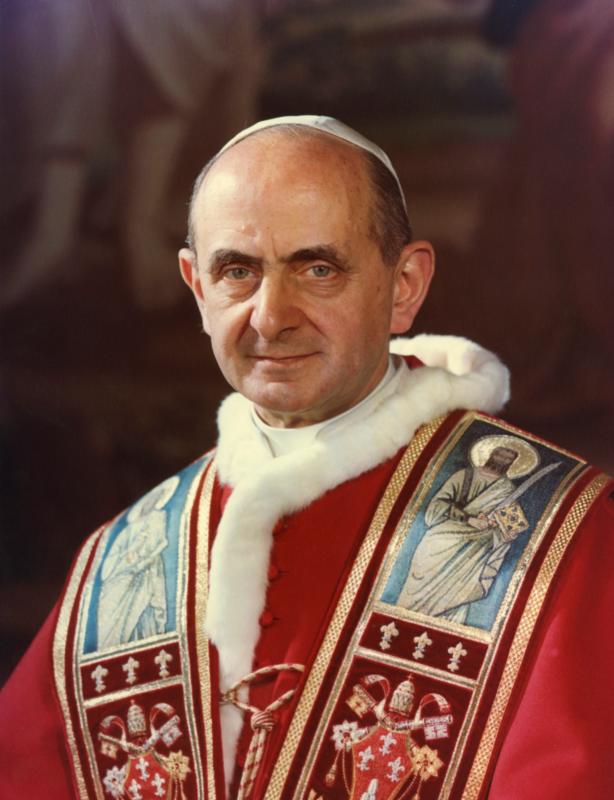
Pope Paul VI was certainly not the most popular pope of the 20th century. The two events that marked his pontificate were not short of controversy, debate and rejection: the Second Vatican Council and the publication of Humane Vitae.
“Among the popes, Paul VI shines out as one who united in himself the pure faith of Saint Peter and the missionary zeal of Saint Paul,” Cardinal Robert Sarah, Prefect of the Congregation for Divine Worship and the Discipline of the Sacraments, wrote in a decree published Jan. 25, 2019.
The future pope, Giovanni Battista Montini was born to a Catholic family Sept. 26, 1897, in Concesio, Italy. He was ordained to the priesthood on May 29, 1920. Pope Francis chose to insert the celebration of Saint Paul VI into the Roman Calendar based on this day.
After his ordination, he worked as a member of the Vatican Secretariat of State under popes Pius XI and Pius XII, and also as a chaplain for Catholic university students.
Cardinal Sarah also asserted that, as the Substitute Secretariat of State, “he worked during the Second World War to find shelter for persecuted Jews and refugees.”
Father Montini was named Archbishop of Milan in 1954 and cardinal in 1958 by Pope John XXIII. He helped the current pope in the preparation of the Second Vatican Council, which he chose to continue after he was elected to the See of Peter in June 1963.
The Archbishop of Denver Samuel J. Aquila published a pastoral letter titled The Splendor of Love in February 2018 in commemoration of the 50th anniversary of Humanae Vitae, in which he affirmed “the great beauty of the Church’s consistent teaching through the centuries on married love, a love that is so desperately needed today.”
“Pope Paul VI defended the integrity of married love and warned us against the danger of reducing sexuality to a source of pleasure alone,” Archbishop Aquila wrote. “He teaches us the truth about married love, listing its four essential qualities: It needs to be fully human, total, faithful, and fruitful.”
“He wished nothing other than the Church would have a greater knowledge of herself in order to be ever more effective in proclaiming the Gospel,” Cardinal Sarah said.

 The POSITIVE Catholic